
Coaching Children in Wrestling
Creating Positive Experiences for Young Wrestlers
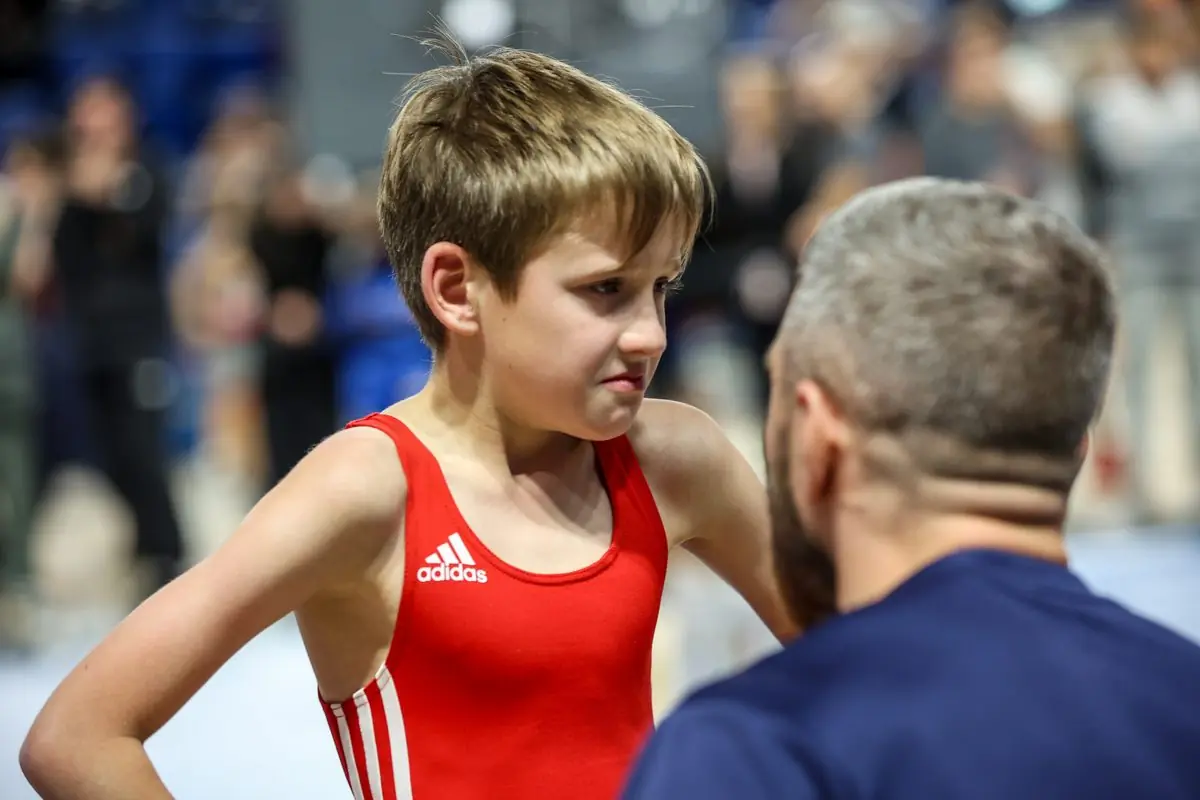
Coaching children is one of the most rewarding and important responsibilities within wrestling. A good coach does much more than teach wrestling techniques. They help children develop confidence, coordination, discipline, friendships and a lifelong enjoyment of physical activity.
The Irish Amateur Wrestling Association (I.A.W.A.) is committed to promoting safe, inclusive and enjoyable wrestling experiences for children and young people of all ages and abilities.
Coaching children requires a different approach from coaching adults. Young wrestlers learn best when activities are engaging, age-appropriate and suited to their individual stages of development.
Put the FUN into FUNdamentals!
Children who enjoy their sporting experiences are more likely to remain active, develop confidence and continue participating in wrestling as they grow.
The following principles will help coaches create positive, effective and enjoyable children’s wrestling programmes.
1. Focus on Fundamental Movement and Wrestling Skills
Young wrestlers should develop a strong foundation of basic movement skills before progressing to more advanced techniques.
Coaches should focus on:
- Balance, coordination and agility.
- Wrestling stance and movement.
- Level changes and body positioning.
- Safe falling and controlled movement.
- Rolling, jumping and appropriate gymnastic movements.
- Basic takedown movements and defensive positioning.
- Body awareness and spatial awareness.
Avoid introducing too many techniques at once. Children benefit from repetition, encouragement and opportunities to practise skills in different ways.
Use games and movement challenges to make learning enjoyable while reinforcing the fundamentals of wrestling.
2. Make Training Fun and Engaging
Children learn through play, exploration and positive experiences.
Training sessions should include a mixture of technical instruction, movement activities, partner exercises and wrestling-related games.
Coaches should:
- Keep instructions clear, simple and age appropriate.
- Use short activities to maintain attention and enthusiasm.
- Introduce variety into training sessions.
- Encourage creativity and problem-solving.
- Allow children to learn through guided discovery.
- Celebrate effort and improvement rather than focusing solely on results.
A well-planned session can be both enjoyable and highly productive.
3. Develop Body Awareness Through Shadow Wrestling
Shadow wrestling is an excellent way to introduce young participants to wrestling movements without the need for physical contact.
It allows children to practise techniques independently while developing coordination, balance, agility and confidence.
Activities may include:
- Wrestling stance and movement.
- Level changes.
- Penetration steps.
- Defensive movements and sprawls, where appropriate.
- Footwork and changes of direction.
- Imaginary wrestling sequences.
Shadow wrestling also allows every participant to remain active rather than spending extended periods waiting for a partner.
Encourage children to use their imagination and visualise themselves performing movements successfully.
4. Encourage and Provide Positive Feedback
Positive encouragement is one of the most effective tools available to a children’s coach.
Young wrestlers respond well when their effort, progress and achievements are recognised.
Coaches should:
- Praise effort, improvement and good behaviour.
- Provide constructive feedback in a supportive manner.
- Recognise individual progress.
- Avoid comparing children negatively with one another.
- Encourage children to learn from mistakes.
- Build confidence through achievable challenges.
Remember that children develop at different rates. A technique that comes naturally to one child may take longer for another to master.
Every child should feel that their effort is valued.
5. Encourage Positive Parental Involvement
Parents and guardians play an important role in supporting children’s participation in wrestling.
Clubs should encourage positive communication between coaches, parents and young wrestlers.
Parents can support their children’s development by:
- Encouraging regular attendance and participation.
- Reinforcing positive sporting values.
- Supporting their child’s enjoyment rather than focusing only on winning.
- Respecting coaches, officials and other participants.
- Helping with appropriate club activities and events.
- Volunteering for club administration or other suitable roles.
Parents interested in assisting with coaching should complete the relevant I.A.W.A. membership, education, safeguarding and Garda Vetting requirements before undertaking responsibilities that require them.
Clubs should maintain clear boundaries between coaching responsibilities and parental involvement.
6. Maintain Structure While Allowing Children to Enjoy Themselves
Children benefit from structured training environments where expectations and boundaries are clear.
However, structure should never come at the expense of enjoyment.
A good children’s coaching session should balance:
- A welcoming introduction and warm-up.
- Fundamental movement activities.
- Technical wrestling instruction.
- Partner-based skill development.
- Appropriate wrestling games and controlled practice.
- A cool-down and positive session review.
Coaches should establish simple rules that promote safety, respect and cooperation.
Use encouragement, consistency and positive behaviour management rather than intimidation or punishment.
7. Introduce Controlled Wrestling Activities
Practical wrestling activities are an important part of developing confidence and applying newly learned skills.
However, children should only participate in contact activities that are appropriate to their age, ability, physical development and experience.
Coaches should introduce controlled wrestling progressively through:
- Partner balance exercises.
- Position-based wrestling games.
- Controlled takedown practice.
- Situational wrestling from agreed starting positions.
- Supervised wrestling activities with clear rules and objectives.
Participants should be appropriately matched, with particular consideration given to age, weight, size, experience and physical maturity.
Coaches must maintain active supervision and ensure that children understand how to stop an activity immediately when instructed.
Avoid excessive physical intensity, inappropriate mismatches or techniques beyond a child’s level of competence.
Safety and skill development must always take priority over winning.
8. Use Video and Visual Learning Resources
Visual demonstrations can help young wrestlers understand how techniques should be performed.
Coaches may use appropriate instructional videos, demonstrations and approved educational resources to support learning.
Short video examples can be particularly useful when introducing new movements or explaining technical details.
Where coaches wish to record training sessions or competitions involving children, they must follow the I.A.W.A.’s safeguarding, photography, consent and data protection requirements.
Images and recordings of children should only be captured, stored or shared in accordance with the applicable club and I.A.W.A. policies.
9. Teach Respect, Sportsmanship and Life Skills
Wrestling provides opportunities for children to develop important personal and social skills.
Through positive coaching, young wrestlers can learn:
- Respect for themselves and others.
- Discipline and self-control.
- Teamwork and cooperation.
- Confidence and resilience.
- Responsibility and commitment.
- Fair play and good sportsmanship.
- How to manage success and disappointment.
- The importance of effort and perseverance.
Coaches should lead by example and demonstrate the behaviours they expect from their athletes.
Children often remember how a coach made them feel long after they have forgotten the result of a competition.
10. Support Every Child’s Individual Development
Not every child who participates in wrestling will want to become a competitive athlete, and that is perfectly acceptable.
Some children enjoy wrestling for fitness, friendship, confidence or simply because they love the sport.
Coaches should recognise that children have different motivations, abilities and developmental needs.
The I.A.W.A. encourages coaches to:
- Provide opportunities for children of all abilities.
- Support the participation of girls and boys equally.
- Make reasonable adjustments for children with disabilities or additional needs.
- Avoid early specialisation and unnecessary pressure to compete.
- Recognise individual progress and personal achievements.
- Encourage long-term participation and enjoyment.
The ultimate measure of a successful children’s wrestling programme is not simply the number of medals won, but the number of children who enjoy the sport, develop their abilities and want to continue participating.
Safeguarding Children in Wrestling
The welfare and safety of children must always be the first priority of every coach and affiliated club.
All coaches working with children must comply with the applicable I.A.W.A. safeguarding policies, codes of conduct and legal requirements.
This includes:
- Completing appropriate safeguarding education.
- Completing Garda Vetting where required.
- Maintaining appropriate supervision and professional boundaries.
- Following safe recruitment and reporting procedures.
- Respecting children’s dignity, privacy and personal boundaries.
- Responding appropriately to safeguarding concerns.
- Providing a safe, inclusive and respectful training environment.
Coaches must understand their responsibilities and know how to report any concerns about a child’s safety or welfare.
Safeguarding is everyone’s responsibility.
iCoachKids: Supporting Coaches Who Work with Children
iCoachKids is an international coaching education initiative dedicated to improving the quality of sporting experiences for children and young people.
Its vision is to ensure that every child has access to a safe, positive and developmentally appropriate sporting environment.
The initiative brings together expertise from coaching organisations, universities and sporting bodies, including Sport Ireland Coaching, to provide educational resources for coaches working with children.
The I.A.W.A. encourages coaches to explore the iCoachKids resources as part of their continuing professional development.
Useful Coaching Resources
The iCoachKids educational materials cover a wide range of subjects, including:
- How children learn.
- Motivating children in sport.
- Diversity and inclusion.
- Physical literacy.
- How children grow and develop.
- Talent identification and development.
- Planning effective coaching sessions.
- Safeguarding and protecting children.
- Personal development through sport.
- Wellbeing and healthy lifestyles.
- Continuing development as a coach.
Visit the iCoachKids website to explore these resources.
Help Shape the Future of Irish Wrestling
Every positive coaching experience can make a lasting difference in a child’s life.
By creating safe, enjoyable and supportive wrestling environments, our coaches help children develop confidence, build friendships, learn valuable life skills and discover the many benefits of wrestling.
The Irish Amateur Wrestling Association is committed to supporting coaches and affiliated clubs in delivering high-quality children’s wrestling programmes throughout Ireland.
For further information on coaching education and safeguarding:
- Coaching courses: iawacourses@gmail.com
- General enquiries: irishwrestlingsecretary@gmail.com
- Website: www.irishwrestling.ie
Positive Coaching. Happy Children. A Stronger Future for Irish Wrestling.